Managing Growth That Expands Beyond Boundaries
Brush Control in Ladysmith for field edges, wooded properties, and neglected ground with dense vegetation
Dense woody growth moves into field edges, access areas, and property boundaries when regular maintenance stops or when mowing equipment cannot handle the size and density of the vegetation. Buzzcut Forestry Services manages brush control projects where saplings, shrubs, and aggressive woody plants have created barriers or reduced visibility and usability on properties throughout Ladysmith. The work differs from routine mowing because it addresses material that is too thick, tall, or established for lawn equipment to process effectively.
Brush control can be a one-time project to reclaim overgrown ground or part of an ongoing maintenance plan to prevent encroachment. The approach depends on what is growing, how long it has been established, and whether the goal is to clear the area completely or selectively thin vegetation to improve access and appearance. Properties with neglected fence lines, unused pasture, or wooded edges that have expanded into open space benefit from targeted brush reduction that restores boundaries and makes future upkeep manageable.
Schedule a property assessment to identify problem areas and determine the most practical control method.
What Proper Brush Management Requires
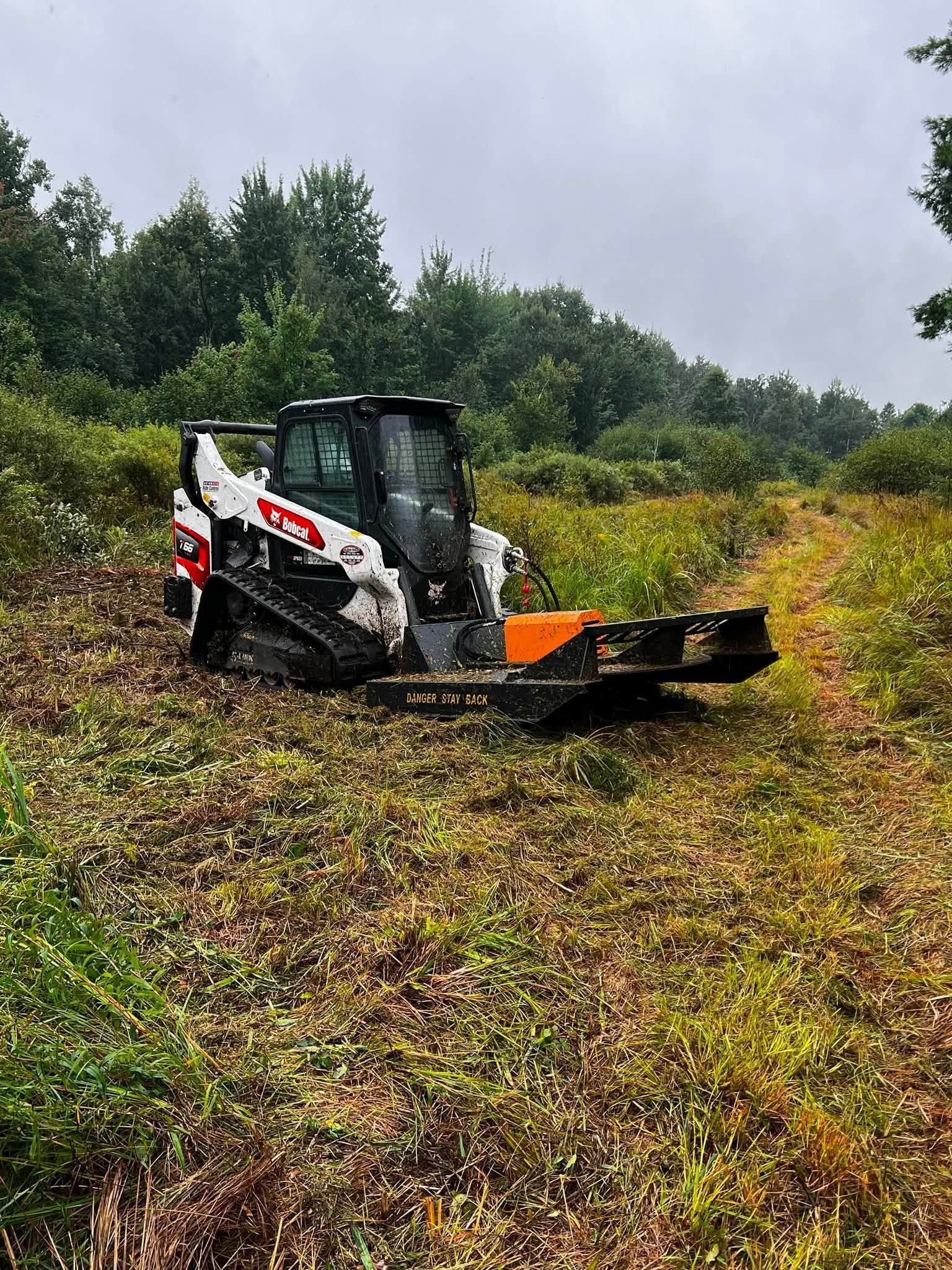
Controlling brush involves cutting or mulching vegetation at ground level and processing the material so it does not require hauling or manual stacking. Equipment choice depends on the density and size of growth—lighter brush can be mulched in place, while heavier saplings may require cutting and chipping. The work exposes the ground beneath the vegetation and removes the visual and physical barriers that limited property use.
After brush control, property lines become visible again, access improves along edges and boundaries, and the cleared areas can be maintained with standard equipment if follow-up work is performed before regrowth reaches the same density. The cleared condition does not last indefinitely without maintenance, particularly on properties with aggressive species like willow, aspen, or buckthorn that resprout quickly from root systems. Some properties require annual or biennial follow-up, while others remain manageable for longer periods depending on soil fertility and surrounding vegetation.
Brush control does not include stump grinding, herbicide application, or grading unless those services are added to the project scope. The work focuses on reducing above-ground vegetation to a level that restores access and visibility, and it sets the property in a condition where future maintenance can prevent the same level of encroachment from recurring.
Questions Before Starting Your Project
Customers managing overgrown properties want to know how brush control differs from other clearing services and what to expect after the work is finished.
What types of vegetation are considered brush rather than trees or weeds?
Brush typically includes woody plants such as shrubs, saplings, and small trees under four inches in diameter, along with dense undergrowth that mowing equipment cannot process. Material larger than this may require land clearing methods rather than brush control.
How does brush control improve future property maintenance?
Reducing dense woody growth resets the property to a condition where standard mowing or trimming equipment can manage regrowth, provided follow-up occurs before vegetation becomes too large again. Without periodic maintenance, aggressive species will re-establish and require the same level of control effort.
What happens to the roots after brush is cut or mulched?
Roots remain in the ground and may resprout depending on the species. Some plants produce new shoots from root systems within a season, while others decline gradually. Controlling regrowth requires cutting new shoots before they mature or applying herbicide if complete elimination is the goal.
How quickly does brush return after control work in Ladysmith?
Regrowth rates depend on species, soil moisture, and sunlight exposure. Properties with fertile soil and full sun may see noticeable regrowth within one growing season, while shaded or dry areas experience slower encroachment. Planning follow-up work within two to three years prevents vegetation from reaching the same density as before.
What is the cost difference between brush control and land clearing?
Brush control is generally less intensive because it addresses smaller material and does not require stump removal or grading. Costs depend on vegetation density, acreage, and access conditions, but the work is typically more economical than full clearing when the goal is maintenance rather than ground preparation.
Buzzcut Forestry Services offers brush control services for properties where vegetation has exceeded manageable levels. Get in touch to review the areas that need attention and receive an estimate based on current growth conditions and your maintenance goals.