Large Areas Brought Back Under Control
Bush Hogging in Ladysmith for fields, acreage, and overgrown open areas where standard mowing equipment can't operate
Tall grass, thick weeds, and light brush take over fields and open acreage quickly when regular maintenance stops, creating fire hazards, blocking property lines, and making the land difficult to walk or assess. Bush hogging knocks down this overgrowth across larger areas where conventional mowers would clog or stall, restoring access and visibility without the precision required for manicured lawns. Buzzcut Forestry Services provides bush hogging throughout Ladysmith and surrounding properties for landowners managing neglected fields, property perimeters, pasture edges, and open acreage that needs functional clearing rather than finish mowing.
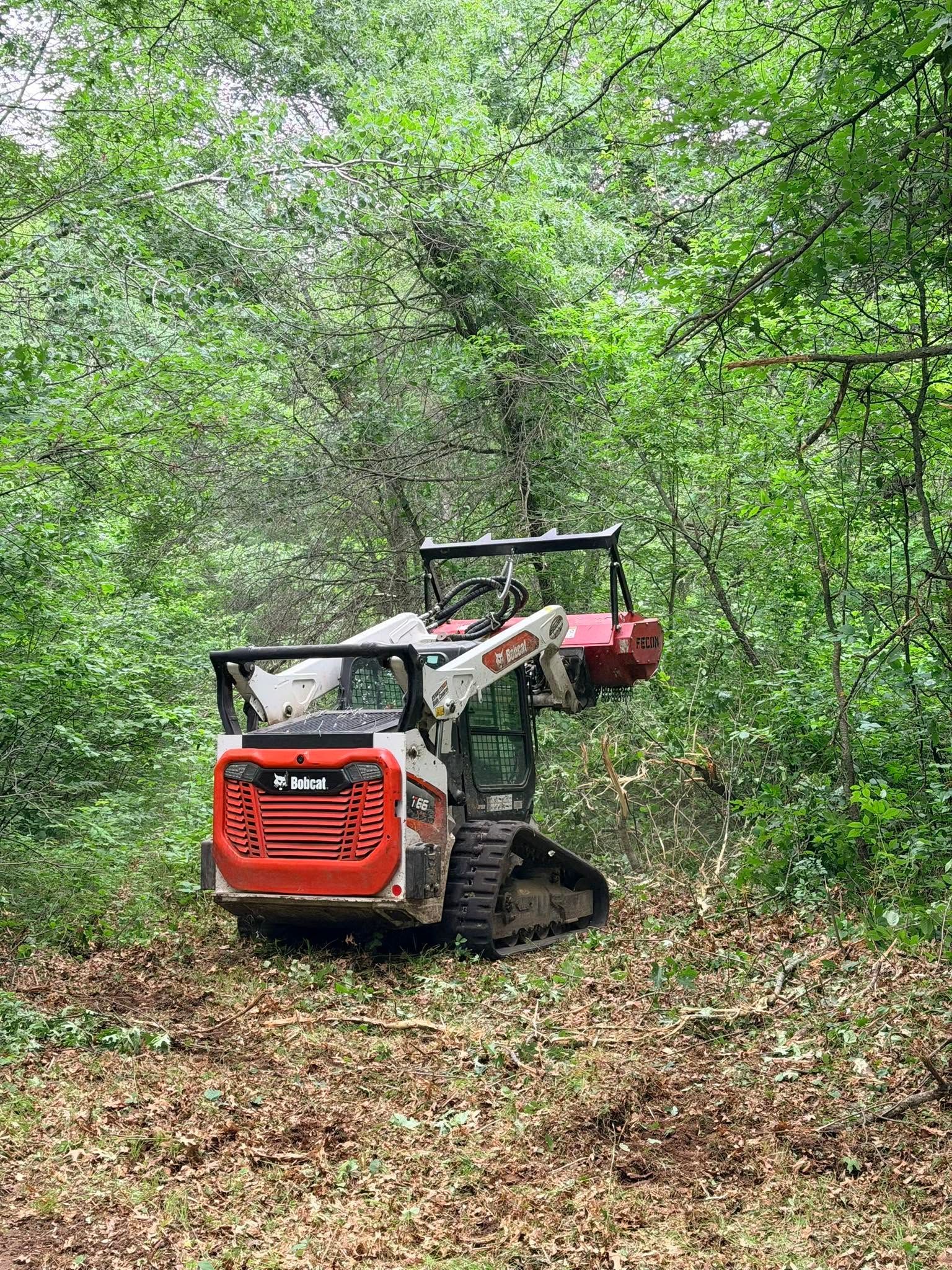
The service uses rotary cutters designed to handle vegetation up to several feet tall, including grasses, weeds, brambles, and saplings under a few inches in diameter. Bush hogging is not the same as forestry mulching—it works best on herbaceous growth and lighter woody material rather than established trees or dense brush. Properties around Ladysmith often include open areas that revert to thick vegetation during a single growing season, especially along field edges, around older structures, or in areas where farming or grazing has stopped.
Contact us with the acreage size and current vegetation height for a clearing estimate.
What Bush Hogging Accomplishes on Open Land
Bush hogging cuts vegetation down to a few inches above ground level, leaving behind mulched material that decomposes over time. The process improves sight lines, reduces tick and rodent habitat, and makes the property easier to traverse on foot or with vehicles. Once the area is knocked down, future maintenance becomes more manageable because regrowth starts from a lower baseline and can be addressed before it reaches the same height again.
After bush hogging is complete, the field or acreage looks visibly cleared, property boundaries become easier to identify, and access for walking, equipment operation, or future land use improves significantly. The cut material remains on the ground as organic cover, which helps prevent erosion and returns nutrients to the soil. While the finish is rough compared to lawn mowing, the functional result is a property that's no longer obstructed by head-high vegetation.
Bush hogging does not remove roots or stumps, so if the area includes woody growth thicker than the cutter can handle, forestry mulching or stump grinding may be needed in addition to the initial pass. The service works best for maintaining open areas that have already been cleared at some point, rather than converting dense woodland into fields. Timing the work before seed heads mature can reduce the density of regrowth in subsequent seasons.
What Landowners Ask About Bush Hogging
Property owners considering bush hogging often need clarity on what the service can handle and how it differs from other clearing methods available in the Ladysmith area.
What size area makes bush hogging cost-effective?
Bush hogging works best on open acreage larger than a typical residential yard—generally a quarter acre or more. Smaller areas with lighter vegetation may be handled with a commercial walk-behind mower, while larger overgrown fields justify the equipment and time required for rotary cutting.
How does bush hogging differ from forestry mulching?
Bush hogging cuts herbaceous vegetation and light brush close to the ground but leaves material in place and does not grind woody stems into fine mulch. Forestry mulching is used for heavier brush, small trees, and areas where complete grinding is preferred over rough cutting.
Can bush hogging handle saplings and small trees?
Light saplings up to a couple of inches in diameter can be cut with bush hogging equipment, but anything thicker or more established requires forestry mulching or manual clearing. The rotary cutter works best on flexible vegetation that bends and severs cleanly rather than hardwood stems that resist the blade.
What time of year is best for bush hogging in Ladysmith?
Late spring through fall allows vegetation to reach a height where cutting is necessary, though midsummer cutting prevents seed maturation and reduces regrowth density. Wet ground can create ruts, so drier soil conditions improve equipment access and reduce site disturbance.
Does bush hogging improve future mowing or maintenance?
Yes—once the initial overgrowth is knocked down, regular mowing or seasonal bush hogging becomes easier because vegetation doesn't start from an unmanageable baseline. Properties that receive periodic cutting stay more accessible and require less effort to maintain over time.
Buzzcut Forestry Services offers bush hogging for fields and open acreage throughout Ladysmith and the surrounding region. Call (715) 415-4943 with your property's acreage, vegetation type, and access details to schedule service and receive a clearing estimate.