Brush Reduction Without Off-Site Hauling
Forestry Mulching in Ladysmith for overgrown acreage and obstructed access routes
Buzzcut Forestry Services handles forestry mulching across properties in Ladysmith where brush, saplings, and unwanted woody vegetation have limited usability or blocked access. The process grinds material directly into the ground rather than cutting and hauling it away, which keeps the work on-site and reduces the time required to address dense growth. Property owners use this service to reclaim trails, open sight lines along property edges, prepare ground for future improvements, and maintain acreage that has become difficult to navigate.
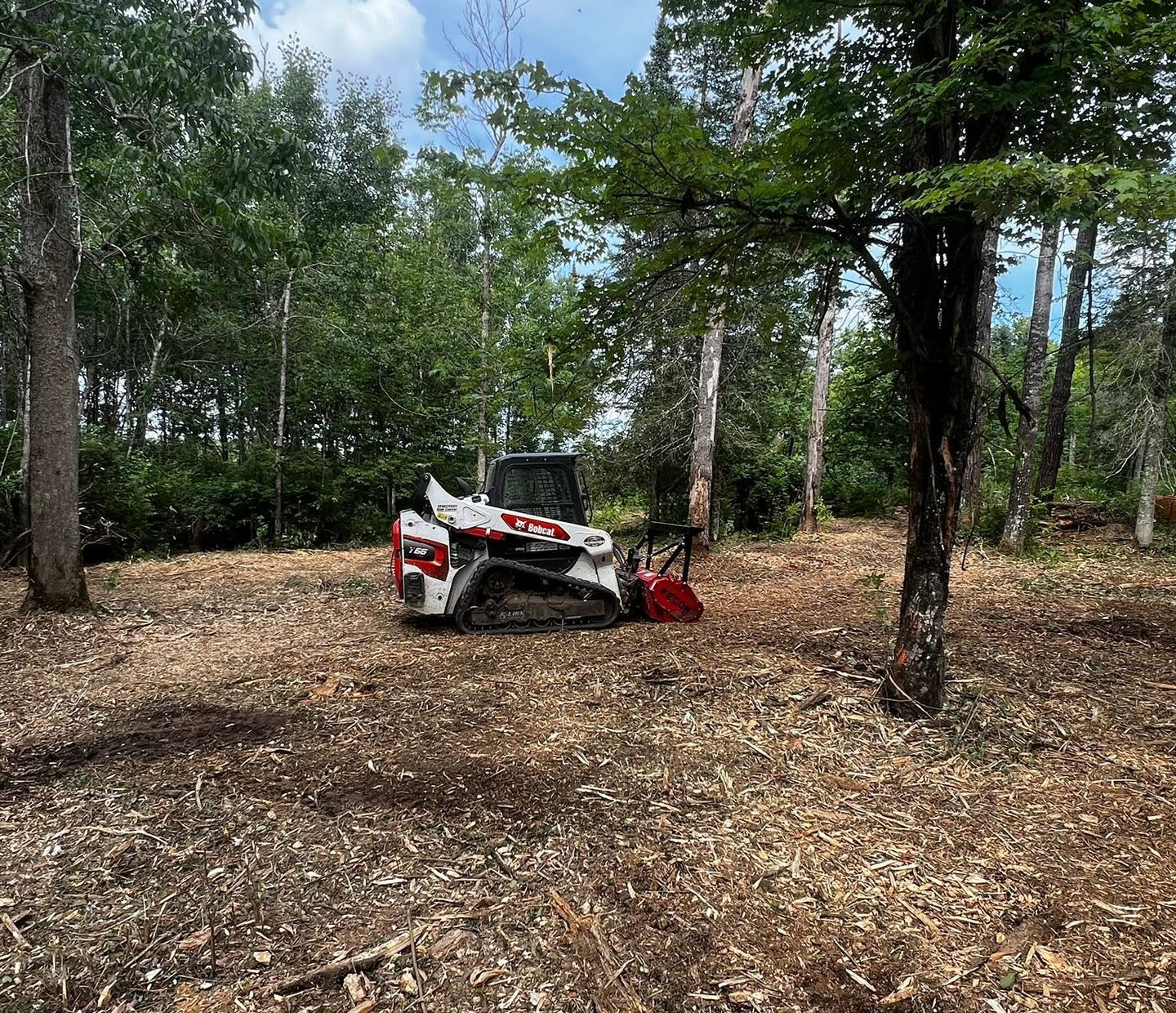
Mulching equipment processes standing vegetation into small fragments that settle into the soil surface, leaving a layer of organic material rather than bare ground. This approach works for clearing undergrowth beneath larger trees, reducing saplings that compete with desired timber, and opening pathways through areas where traditional mowing equipment cannot operate. The mulched material decomposes over time and does not require removal or burning.
Schedule a property evaluation to review density, terrain, and the specific areas you want addressed.
What Happens After Vegetation Is Processed
The mulching process converts standing brush and saplings into ground-level fragments, which changes how the property appears and functions. You see cleared sight lines where vegetation previously blocked views, and access becomes possible through areas that were difficult or unsafe to walk or drive through before the work. The mulched layer remains on the ground as a mat that suppresses some regrowth and reduces erosion on sloped terrain.
After forestry mulching, the property supports easier movement for equipment, vehicles, and foot traffic, and maintenance becomes more manageable because the dense woody growth has been reduced to a processed layer. The work does not eliminate all future vegetation, but it resets the property to a more controlled state that allows you to manage regrowth with less effort than cutting through mature brush.
The extent of clearing depends on vegetation density, the size of material being processed, and whether the goal is full access or selective thinning. Some properties require follow-up work if aggressive species resprout, while others remain open for extended periods depending on soil conditions and surrounding seed sources.
What Property Owners Usually Ask
Forestry mulching raises practical questions about how the process works, what it leaves behind, and how long results last in the conditions common to wooded properties around Ladysmith.
What size of vegetation can forestry mulching handle?
Mulching equipment processes brush, saplings, and small trees typically up to six inches in diameter, though capacity varies with wood density and machine specifications. Larger trees require felling and separate processing if removal is part of the project scope.
How does the mulched material affect the ground after the work is finished?
The processed fragments form a surface layer that decomposes gradually, adding organic matter to the soil and providing temporary suppression of some regrowth. The layer does not prevent all vegetation from returning, but it reduces the immediate density of new shoots compared to cutting alone.
When is forestry mulching a better choice than traditional clearing methods?
Mulching works well when you want to avoid hauling debris off-site, when access is limited for larger equipment, or when you need to preserve topsoil and minimize ground disturbance. It is less suitable for properties requiring complete stump removal or grading for construction.
What factors influence how long cleared areas remain open in Ladysmith?
Soil moisture, seed sources from adjacent vegetation, and the types of plants processed all affect regrowth rates. Properties with aggressive species like aspen or willow typically see faster regrowth than areas dominated by slower-reproducing hardwoods.
How should I prepare the property before mulching begins?
Clear any fencing, stakes, or debris that could damage equipment, and mark any features you want preserved, such as specific trees, utility lines, or boundary markers. Wet or frozen ground conditions may delay scheduling depending on terrain and equipment weight.
Buzzcut Forestry Services provides forestry mulching estimates based on vegetation density, acreage, and access conditions specific to your property. Contact us to review the areas you want cleared and discuss the most practical approach for your land.